Discover the Auvergne Volcanoes and the Chaîne des Puys
Worried you might miss the best-kept secrets of the Chaîne des Puys during your stay? This article reveals the history and features of the 80 peaks of this UNESCO-listed site, so you can better understand every Auvergne volcano. You’ll discover the most accessible trails up Puy de Dôme or Pariou, while uncovering the mystery of whether these sleeping giants beneath your feet could one day wake up.
The Spectacular Alignment of the 80 Auvergne Volcanoes
Now that we’ve set the scene for this unique landscape, it’s time to get to the heart of the matter: this geological straight line.
A geological structure unique in the world
Picture a 32km line, perfectly drawn across the Dômes plateau. The Chaîne des Puys faithfully follows the Limagne fault, a colossal scar in the Earth’s crust.
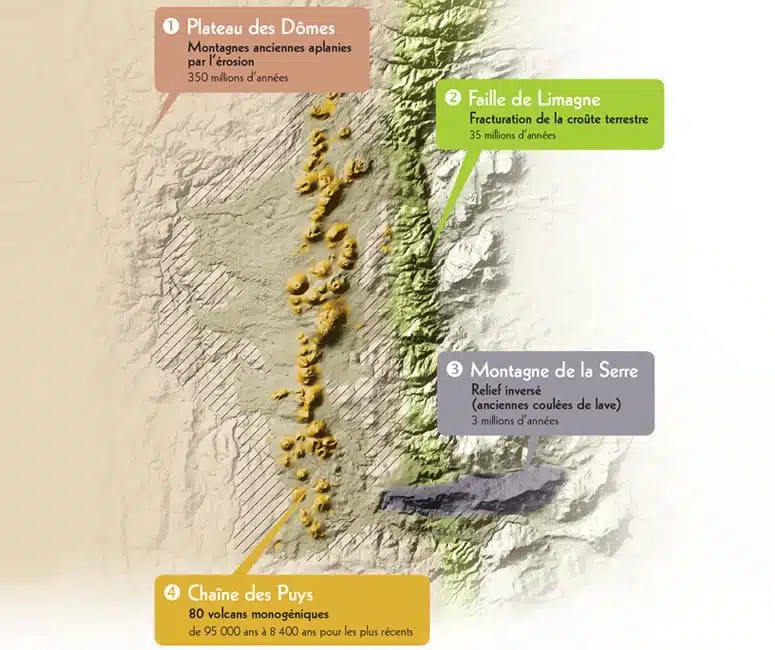
This phenomenon results from the birth of the Alps. The stretching of the tectonic plate thinned the crust, creating a rift. To explore this site, discover the exciting Auvergne volcanoes and their activities.
Magma took advantage of these deep fractures. Rising up through the cracks, lava burst forth to sculpt the landscape you admire today.
Telling apart cones, domes and maars
You’ll first come across the red volcanoes, known as Strombolian type. Their fluid magma throws out scoria that piles up into regular cones. Their lava flows are impressive.
The famous Puy de Dôme illustrates another style: the grey dome. Here, viscous lava piles up with no crater. These explosive eruptions are formidable and form massive landforms.
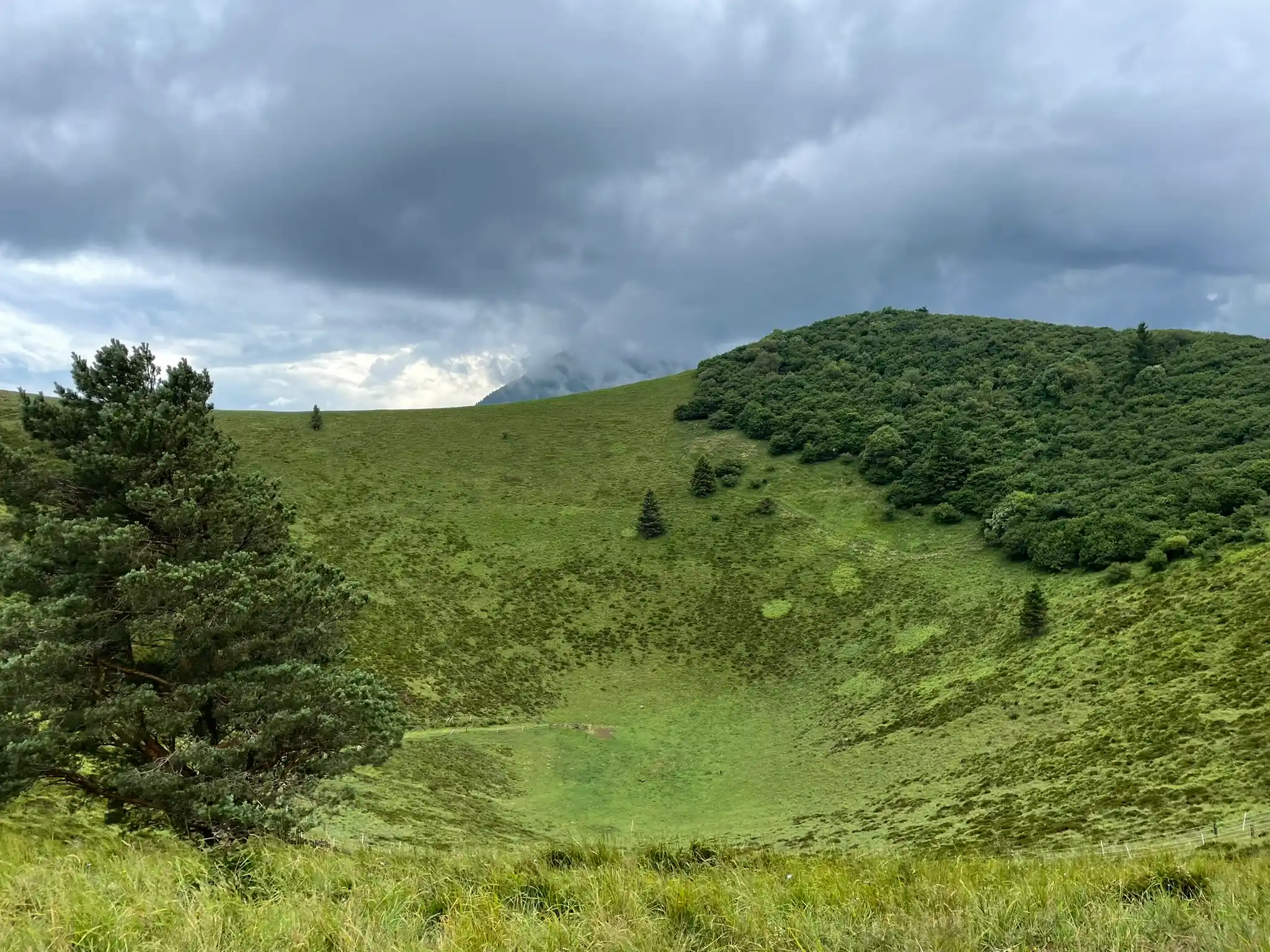
Finally, maars are born from an explosive meeting between magma and water. These phreatomagmatic explosions carve out perfectly circular craters. They often turn into peaceful, deep lakes.
The Must-Climb Peaks for Your Next Hike
Understanding the geology is a good start, but nothing replaces getting out there and climbing these sleeping giants.
Puy de Dôme, the region’s natural viewpoint
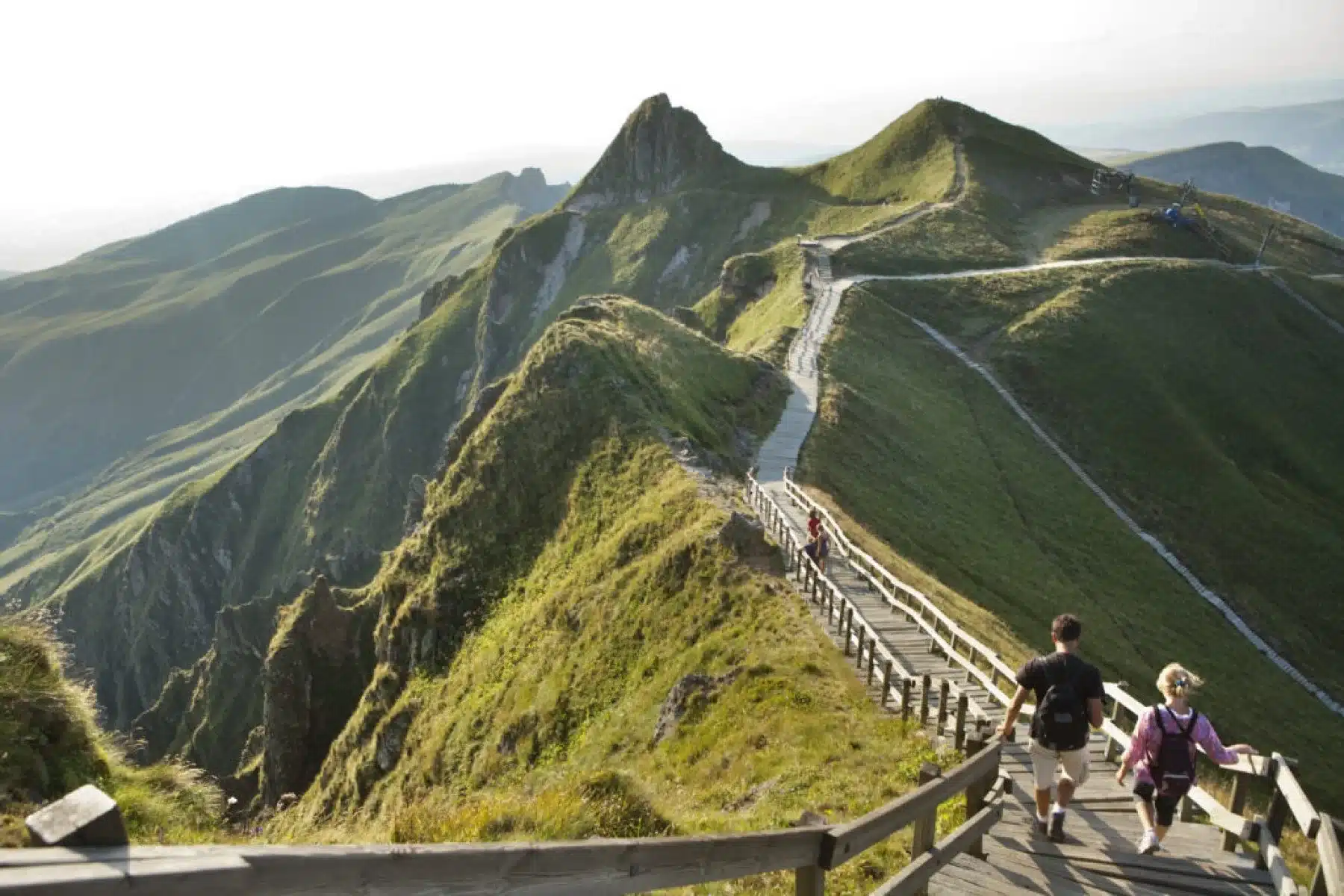
You can climb on foot via the famous Chemin des Muletiers. For a gentler ascent, the rack railway drops you off at the summit. Discover the various walking routes available here. Access is simple and really well laid out.
Once up there, the 360-degree view over the plain is breathtaking. You’ll also admire the remains of the Temple of Mercury. It’s a place steeped in unique Gallo-Roman history.
Puy Pariou and the Clierzou caves
Puy Pariou reveals a crater with absolutely perfect geometry. Its silhouette is known around the world thanks to mineral water bottle labels. It’s the most elegant volcano in the area.
Right next door, the Clierzou caves offer a shady stop. You’ll find a welcome coolness there in summer. The view of Puy de Dôme from here is magnificent.
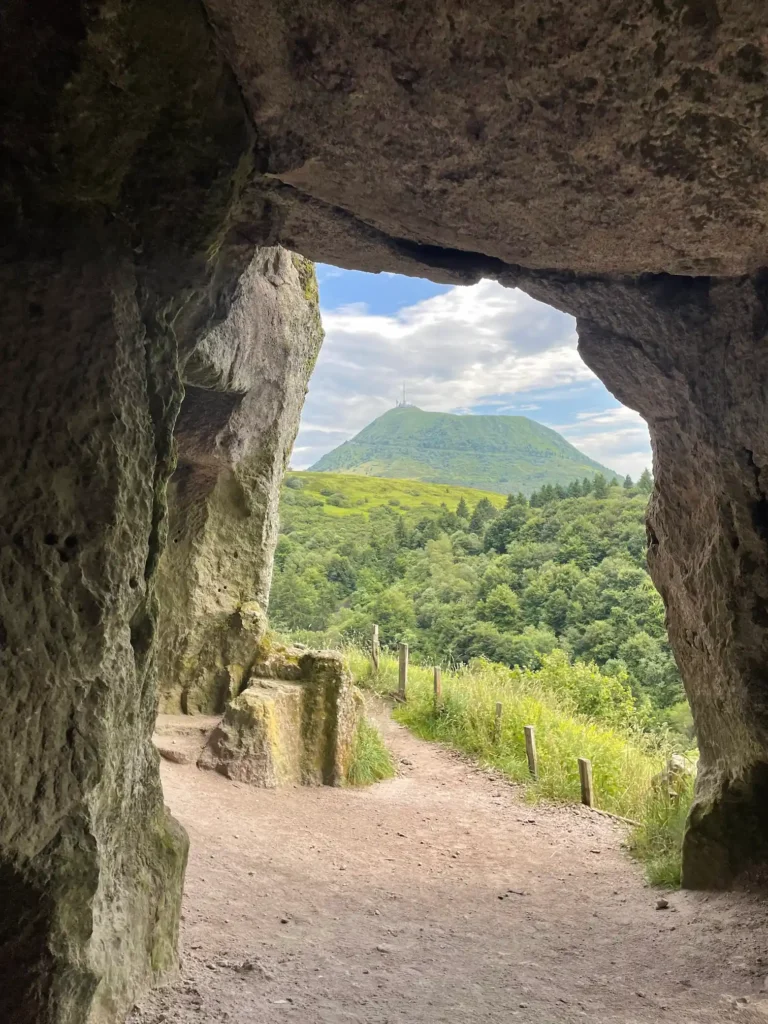
Take care, though, as excessive trampling weakens the volcanic soils. Access restrictions now protect the crater floor from erosion. Be sure to stick to the marked trails.
La Vache and Lassolas, the youngest in the chain
These two volcanoes are recognisable by their breached crater and red hues. Fluid lava swept away part of the flank during the eruption. It’s a rare geological sight.
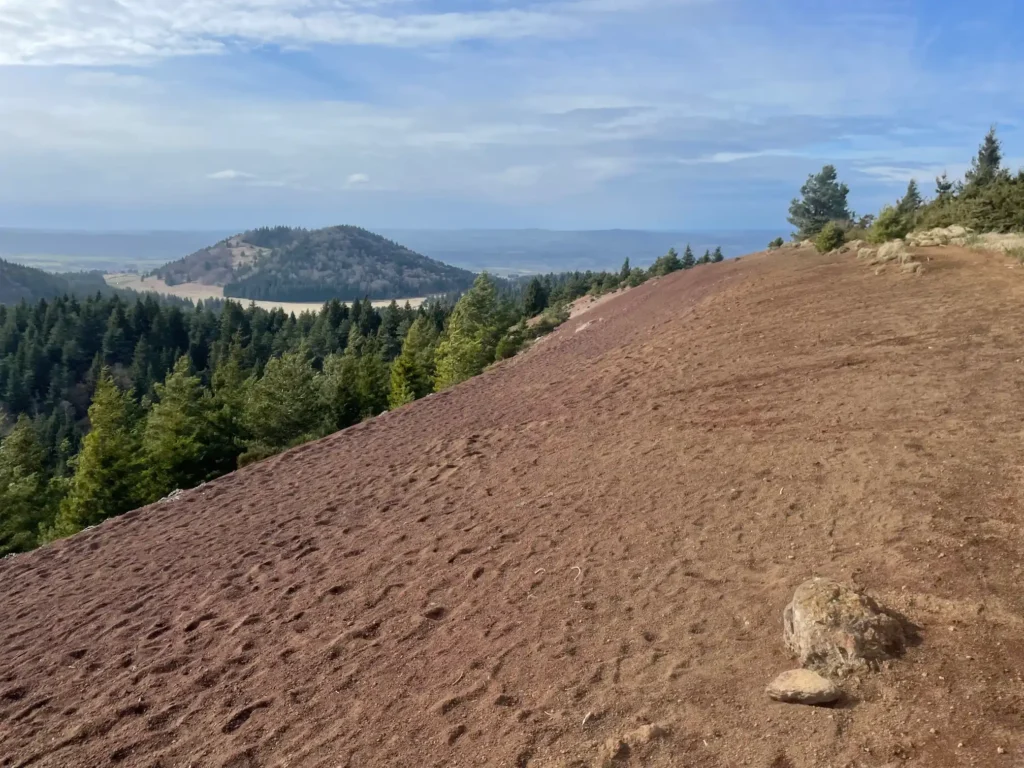
The southern part of the chain offers a wilder, more unspoiled atmosphere. Note that some trails occasionally close to let nature breathe. Check before setting off to explore.
A Fragile Balance Between Geology and Pastoral Farming
If these landscapes have reached us so crisp and clear today, it’s no accident, but thanks to a clever blend of nature and human activity.
Why are the volcanic shapes still intact?
Every volcano here is a monogenetic structure. This means it was born from a single, brief eruption. Once the activity ends, the conduit seals up for good.
Their youth explains this exceptional state of preservation. The youngest ones are just 8,000 years old. Erosion simply hasn’t had time to smooth out their perfect silhouettes.
By contrast, the Cantal has much more eroded landforms. These are ancient stratovolcanoes, far older ones. Their original shapes have vanished under the effects of time.
The role of grazing herds in preserving the landscape
Pastoral farming is the guardian of these views. Rava sheep graze on the young shoots. This stops the forest from covering over the craters. For your hikes, discover the local activities.
Do stay alert during your walks, though. Don’t get too close to the animals. Keep a safe distance from the guard dogs.
The Regional Nature Park watches over this treasure. This exemplary management made the UNESCO listing possible. It’s a recognition of this geological heritage, unique in the world.
Could the Auvergne Volcanoes Wake Up Again?
This peaceful beauty, however, hides a question on everyone’s lips: could the giant wake from its nap?
The scientific interpretation of deep microseisms
DLP and DLF type microseisms stir the depths. These invisible vibrations originate 30 kilometres beneath your feet. They bear witness to a very real and persistent geological activity.
Magma still circulates at the boundary of the Earth’s mantle. The magma chamber is therefore not completely solidified. This residual heat fuels experts’ discussions about a possible future awakening.
A distinction must be made between an extinct volcano and one that’s simply dormant. The Auvergne falls into the category of sleeping giants. The current silence doesn’t guarantee the permanent extinction of the underground fires.
The constant monitoring by the Regional Seismic Network
Monitoring relies on watching for precise signs. Ground swelling or gas emissions would be suspicious. These clues would betray an imminent rise of molten rock.
The authorities analyse data in real time for your safety. You can visit Vulcania to deepen your knowledge. Sensitive sensors detect the slightest anomaly beneath the Chaîne des Puys.
Predicting an exact date for an eruption remains impossible. The probability exists without being imminent. Nature keeps its own calendar, far from our human certainties.
This majestic line of 80 peaks, listed by UNESCO, offers a unique geological diversity between domes and craters. Start exploring this exceptional site right now by climbing Puy de Dôme or Pariou. Go and discover every Auvergne volcano before these sleeping giants wake up again.